I have been practicing stoic principles my whole life without knowing about the philosophy behind it. Maybe it’s part of my German heritage. Although stoicism has experienced a revival over the last few years, I feel many people have misconceptions about the core nature of this philosophy. Stoicism is “a guide to life based on reason rather than faith” supporting self-mastery, perseverance, and wisdom — principles dating back to Marcus Aurelius that remain as relevant today as they were thousands of years ago.
A Modern Approach to Ancient Philosophy
Jonas Salzgeber’s The Little Book of Stoicism: Timeless Wisdom to Gain Resilience, Confidence, and Calmness makes ancient philosophy practical for contemporary life. The book divides into two sections: the first explains stoicism’s goals and key philosophers, then presents the author’s “Stoic Happiness Triangle” framework. The second section offers 55 actionable daily practices.
The Stoic Happiness Triangle
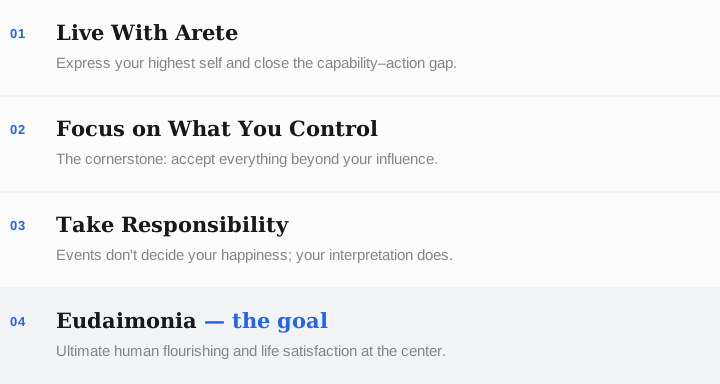
The triangle centers on Eudaimonia — ultimate human flourishing and life satisfaction. Three corners support this goal:
Live with Arete emphasizes expressing your highest self consistently, closing the gap between capability and action.
Focus on What You Control represents stoicism’s cornerstone principle — concentrating on controllable factors while accepting external circumstances beyond your influence.
Take Responsibility reminds practitioners that external events don’t determine happiness; rather, personal interpretation and chosen responses do.
Favorite Stoic Practices
Here are some of the practices from the book that resonated with me the most:
-
Become an eternal student: Following Seneca’s wisdom that “Leisure without study is death,” intentional learning drives growth.
-
Choose courage and calm over anger: Seneca describes anger as “brief madness,” causing loss of self-control and reason.
-
The Equanimity Game: Measuring how quickly one recovers from mistakes demonstrates resilience.
-
Buy tranquility whenever possible: Using Epictetus’s principle, one can choose peace over irritation over minor inconveniences.
-
Lead by example: Demonstrating beliefs through action proves more powerful than verbal instruction.
The Stoics spent a lot of time thinking about death. So does this exercise. The Funeral Exercise asks you to imagine what people would say about you at the end of your life. It’s the kind of reflection Marcus Aurelius would have approved of. Try it for free →